


- Neurology
- Research & Innovation
- 2026
72-Hour EEG at Home: An Alternative to Hospitalization for Long-Term EEG Recordings
Author : Margaux Delvaux
Estimated reading time: 5 minutes
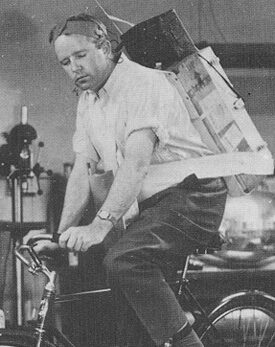
The long-term EEG Holter monitor was invented in 1947 by Norman Jefferis Holter. Over the past nearly 80 years, the equipment and procedures for long-term EEG exams have come a long way!
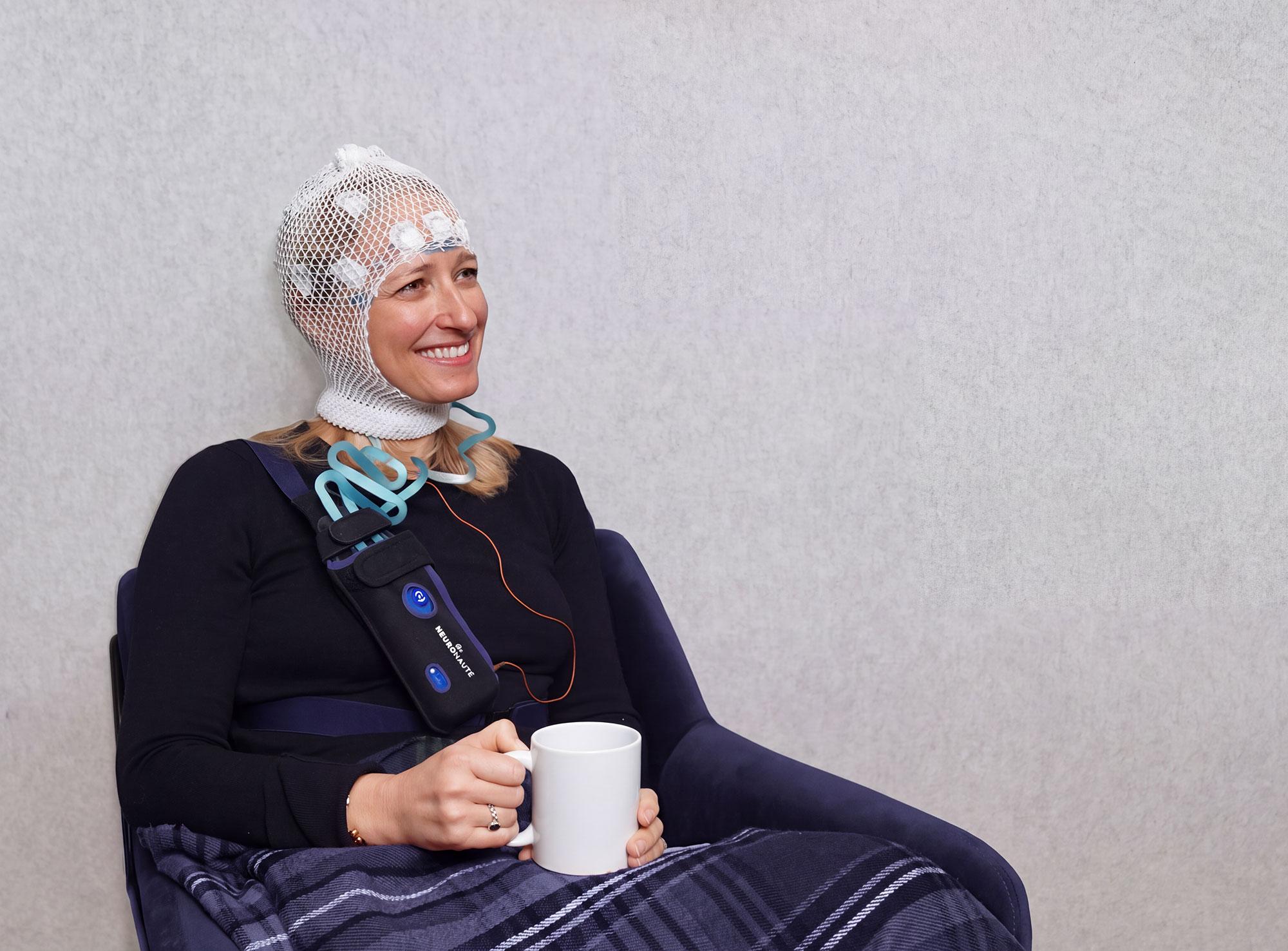
In fact, at BIOSerenity, we offer a groundbreaking procedure: thanks to our lightweight, compact, and connected equipment, patients can now complete their entire 72-hour long-term EEG exam right in their own homes.
The many benefits of a long-term EEG conducted directly at the patient’s home
One-third of standard EEGs fail to detect abnormalities (Smith et al., J Clin Neurophysiol, 2020), which is why a long-term EEG may be prescribed. Thanks to technological advances at BIOSerenity, it is now possible to perform the exam at home: a true revolution, since the test typically requires a 3-day hospital stay!
In fact, the BIOSerenity equipment is wireless, allowing patients to move around and live freely in their own homes for 72 hours. BIOSerenity’s equipment is 100% made in France and designed at our factory in Troyes.
This approach reduces the anxiety and constraints associated with hospitalization for both adults and children, while allowing patients to continue some of their usual activities, particularly work-related (through remote work, if possible) or school-related activities.
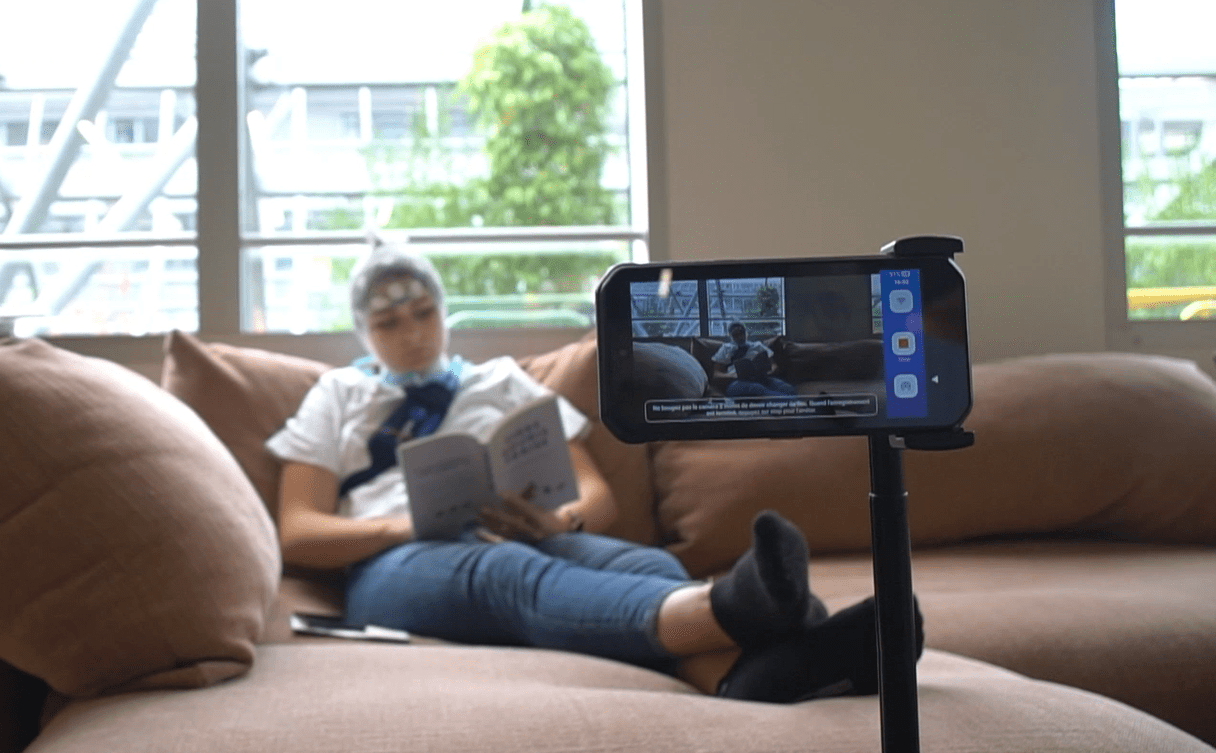
Long-term home EEG is thus a flexible and accessible solution, particularly beneficial for patients who live far from specialized centers or for whom hospitalization is difficult to arrange (such as neurodivergent individuals or those with disabilities).
The patient remains in their usual living environment, providing the interpreting neurologist with a more representative view of their daily life and symptoms. Real-time data transmission facilitates remote interpretation by our neurophysiology experts, who analyze the data daily and typically issue the report within a few days of the exam.
Unlike in a hospital, where the wait time for an appointment is usually several months, BIOSerenity’s rapid waiting times for both care and reporting ultimately improve and accelerate patient care by the referring neurologist and save time in reaching a diagnosis.
How does a long-term EEG with BIOSerenity work?
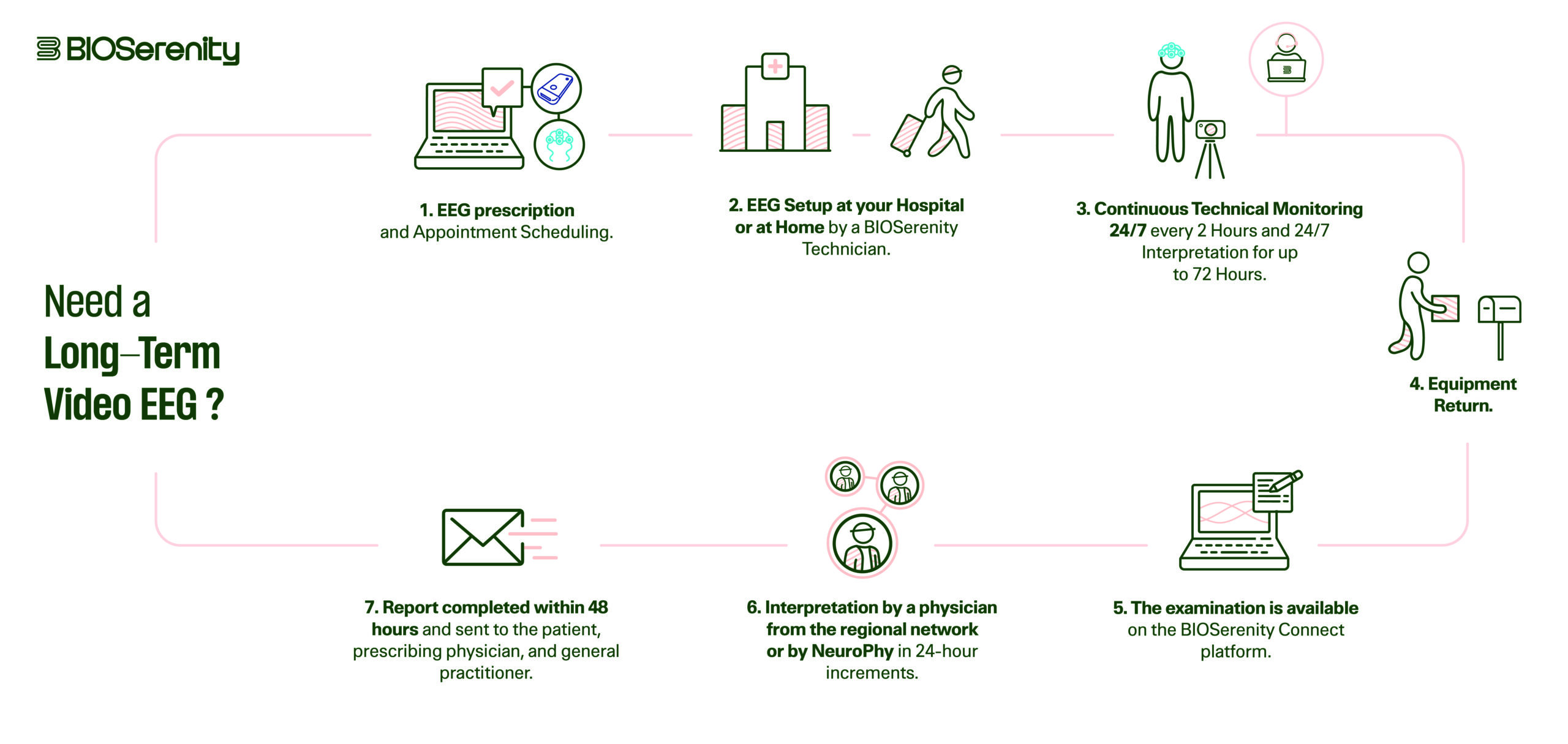
Once the patient has a prescription for a long-term EEG, they should contact our secretary’s office by phone or email to schedule an appointment. Once the appointment is scheduled, the patient will receive confirmation via Doctolib, as well as automatic reminders as the scheduled date approaches.
At the same time, the nurse is notified that an exam is scheduled and will receive an EEG kit from our factory, which will allow them to equip the patient directly at their home.
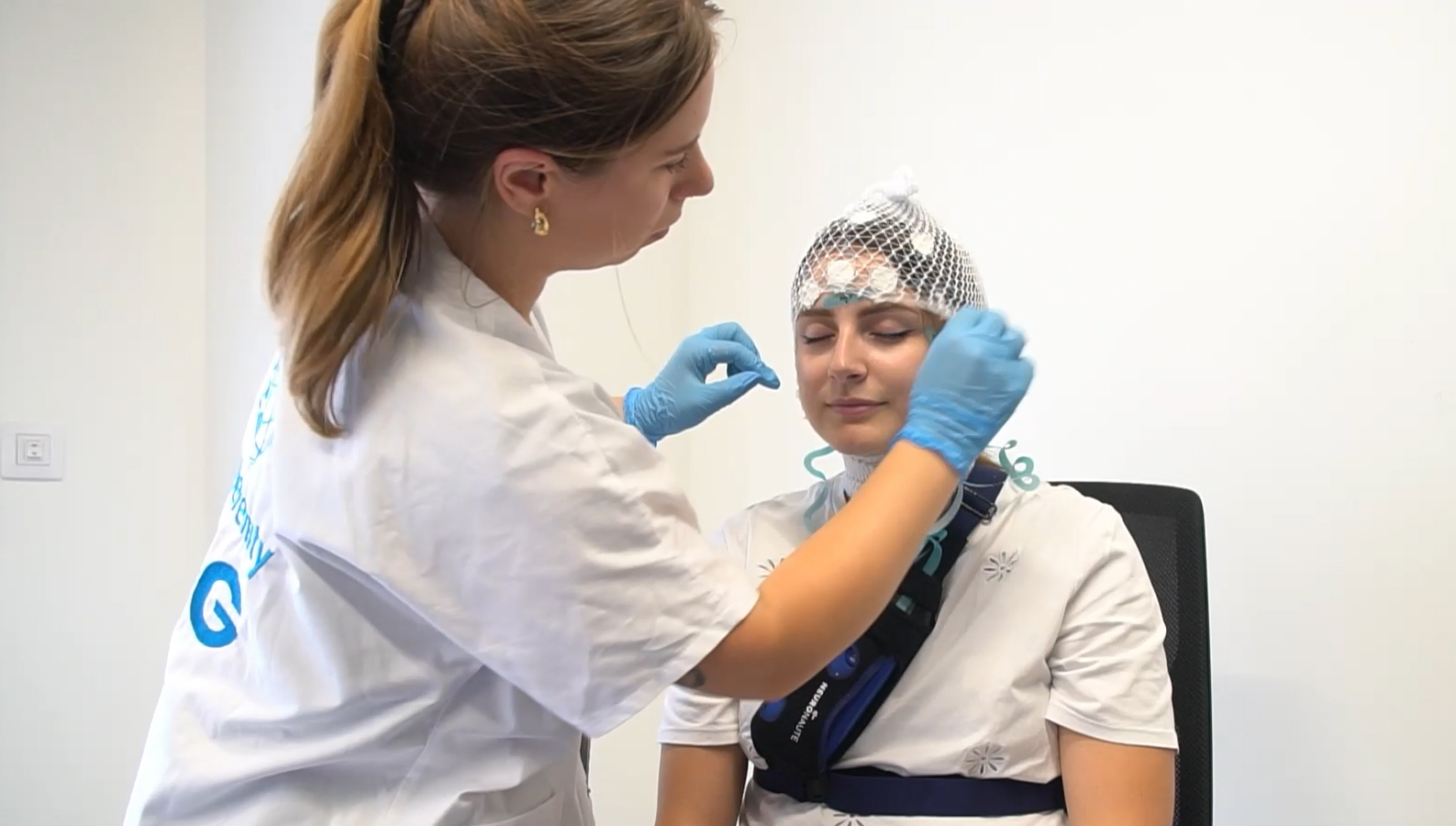
The appointment will involve placing electrodes on the patient’s scalp using conductive paste. The appointment may last up to 2 hours. At the end of it, the patient will be fully equipped and can return home with an EEG device attached to their chest.
During the 3-day recording period, the patient remains at home and continues with their usual activities, while ensuring that the camera is recording continuously and that all equipment remains turned on.
Throughout the entire examination, the patient can contact our technical monitoring team, available 24 hours a day, 7 days a week, for any technical or clinical issues. The monitoring team also contacts the patient daily to document any symptoms and ensure the examination is proceeding smoothly. In addition, the team can reach the patient at any time if a technical issue is detected, in order to resolve it and ensure uninterrupted recording.
At the end of the exam, the patient places the equipment back in the storage case, then into the return box, which they can then drop off at the nearest post office. The patient can then remove their EEG headset on their own while showering.
Our factory in Troyes receives patient’s kits from all over France. There, staff complete the transmission of any remaining EEG data, recharge all batteries, and disinfect the equipment. The kits are then repackaged for shipment throughout France. They are thus made available again to technicians who will fit them on other patients.
In parallel with the recording, an initial level of remote interpretation is performed daily by a BIOSerenity neurologist, who has real-time access to the EEG trace and video. Once the equipment has been received and the data is fully transferred, the expert neurologist writes the report. This report is then sent via a secure medical app to the patient and the prescribing physician.
This process involves about twenty people daily, ensuring that the neurologist has all the necessary information to analyze the exam under the best possible conditions and contribute to optimal patient care.
Discover Neurophy, our EEG diagnostic service for neurological care, long-term video EEG (VLD) and its EpiPhy service.