


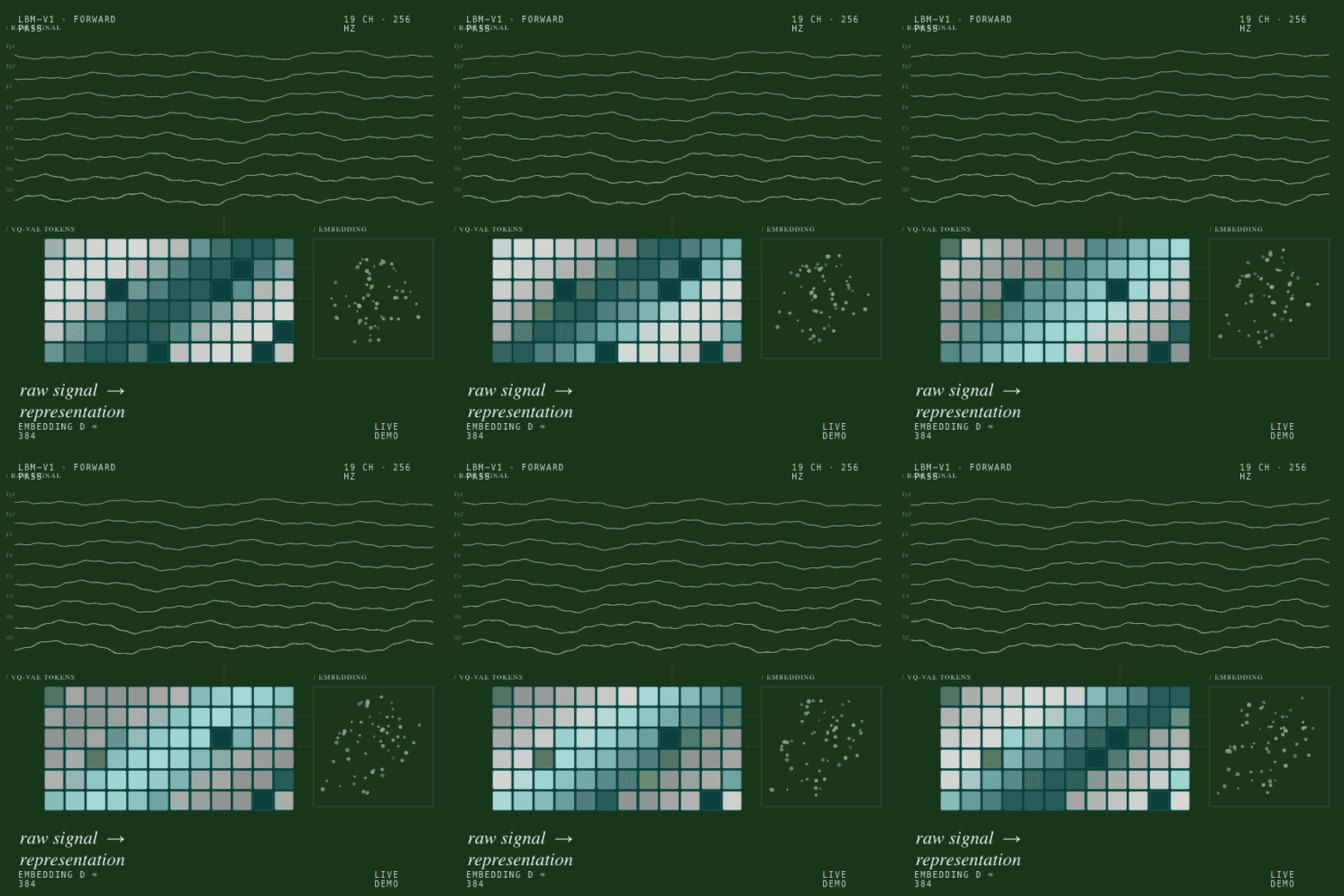
A foundation model that reads the brain.
AI-powered neurological diagnostics.
100M parameters · +1B tokens · 100,000+ EEGs
The Large Brain Model is BIOSerenity‘s self-supervised foundation model for clinical electroencephalography. One pre-trained backbone, fine-tuned across the full landscape of neurological diagnostics, from seizure detection to pathology classification, with up to 20× less annotated data than classical deep learning.
Estimated reading time: 5 minutes
A foundation model that reads the brain.
AI-powered neurological diagnostics.
100M parameters · +1B tokens · 100,000+ EEGs
The Large Brain Model is BIOSerenity‘s self-supervised foundation model for clinical electroencephalography. One pre-trained backbone, fine-tuned across the full landscape of neurological diagnostics, from seizure detection to pathology classification, with up to 20× less annotated data than classical deep learning.
Estimated reading time: 5 minutes
A foundation model that
reads the brain.
AI-powered neurological diagnostics.
100M parameters · +1B tokens · 100,000+ EEGs
The Large Brain Model is BIOSerenity‘s self-supervised foundation model for clinical electroencephalography. One pre-trained backbone, fine-tuned across the full landscape of neurological diagnostics, from seizure detection to pathology classification, with up to 20× less annotated data than classical deep learning.
Estimated reading time: 5 minutes
What is LBM ?
An EEG reader
that learned the brain’s language first.
Modern AI models for medical signals usually need thousands of expert-labelled examples to do anything useful, a bottleneck that has held neurology back for a decade.
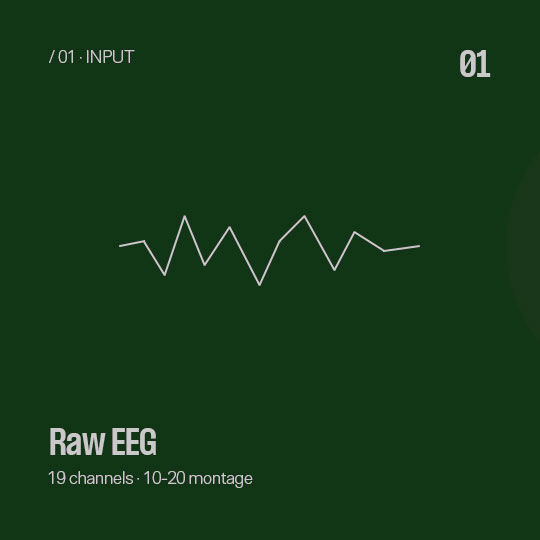
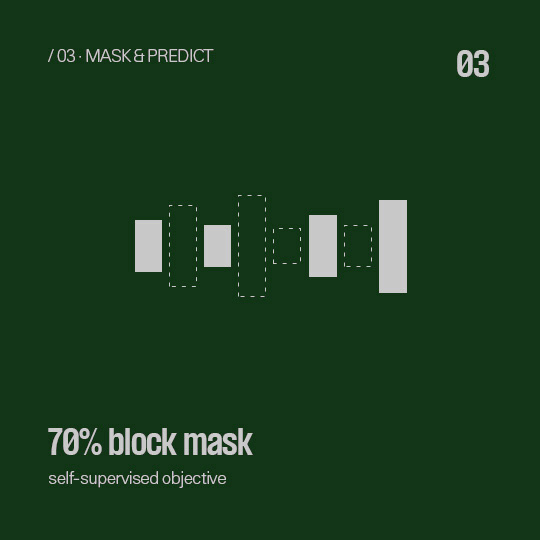
The Large Brain Model takes a different route, borrowed from the same family of techniques that gave us GPT and AlphaFold: self-supervised pre-training. Instead of being told what each EEG means, LBM is shown hundreds of thousands of hours of raw brain activity and asked to fill in masked pieces of the signal.
Over time, it builds an internal grammar of what brain activity looks like : the shape of sleep, the rhythm of focus, EEG wave propagation, without anyone teaching it the labels.
It learns what brain activity looks
like, before it ever learns what to call it.
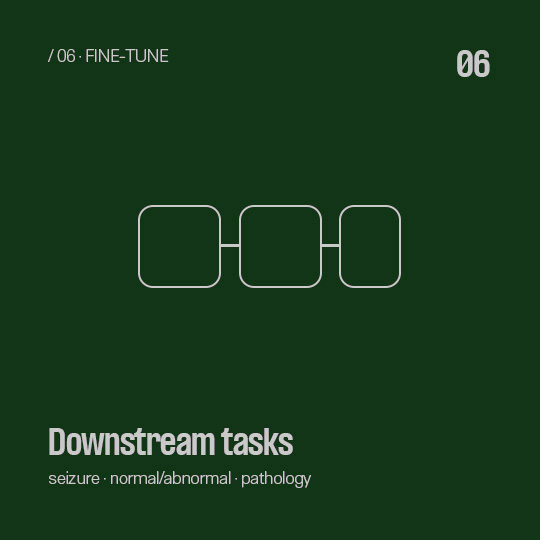
Once that backbone exists, it becomes a universal starting point. A new clinical task, detecting epileptic events, scoring sleep, flagging an abnormal recording, needs only a small fine-tuning head and a small amont of labelled data.
The result is a single model that compounds. Every new hospital, every new dataset, every new task makes the next one cheaper, faster, and more accurate to ship.
Architecture
Pre-train. Fine-tune. Deploy.
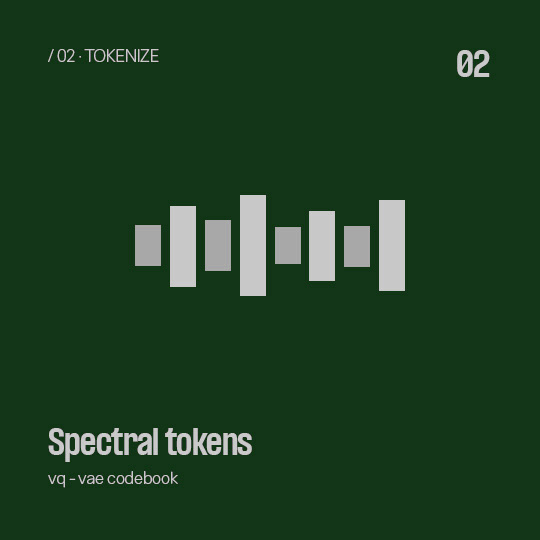
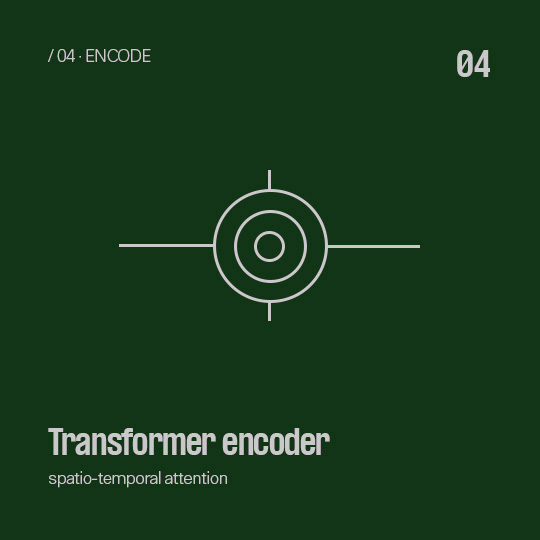
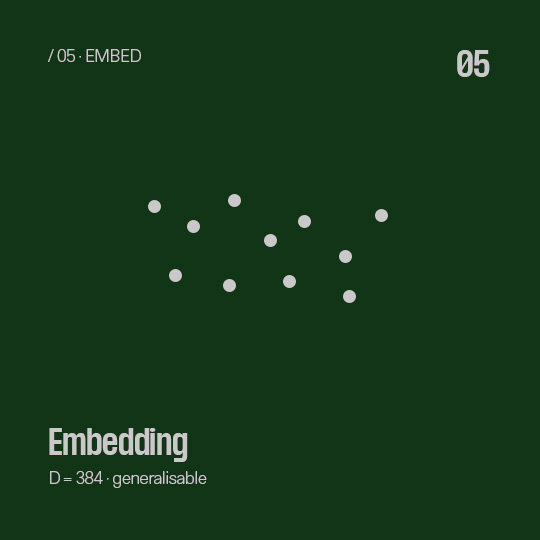
A two-phase self-supervised pipeline, VQ-VAE tokenisation followed by masked spectral prediction, produces a 384-dimensional embedding that generalises across every downstream EEG task we tested.
Performance
State-of-the-art across
every clinical task measured.
Task T1 · Seizure detection
0.926 AUROC
Seizure event detection
+ State-of-the-art on TUSZ
Task T2 · Normal / Abnormal
0.970 AUPRC
Recording-level triage
+ Bettinardi et al. 2025
Task T3 · Abnormality classification
0.730 F1
Multi-class pathology
+ 6 clinicals categories
Low-data regimes
+ 2-17%
Lift over classical DL
+ Across all tested tasks
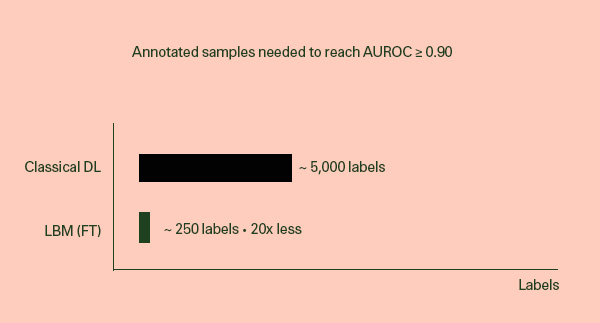
Up to 20× less annotated data,
same accuracy.
Self-supervision fundamentally changes the labelling economics. On internal benchmarks, fine-tuned LBM heads reach the performance of classical deep-learning baselines with a small fraction of the expert-annotated EEG data collapsing the time and cost of bringing a new diagnostic to market.
Moat
The data flywheel nobody else has.
Self-supervised foundation model for clinical electroencephalography.
/ 01 — Proprietary corpus
100,000+
Exploitable clinical EEGs
Acquired through BIOSerenity’s owned device + service network. Curated, de-identified, exam-grade.
/ 02 — Vertical stack
Device x AI
End-to-end ownership
Neuronaute & EpiPhy hardware, acquisition pipeline, AI models, clinical reporting – all under one roof.
/ 03 — Regulatory lead
CE IIb
SaMD · MDR · AI Act ready
IEC 62304 · ISO 13485 quality system. Live experience pushing AI biomarkers through European clearance.