


This page is reserved for healthcare professionals.
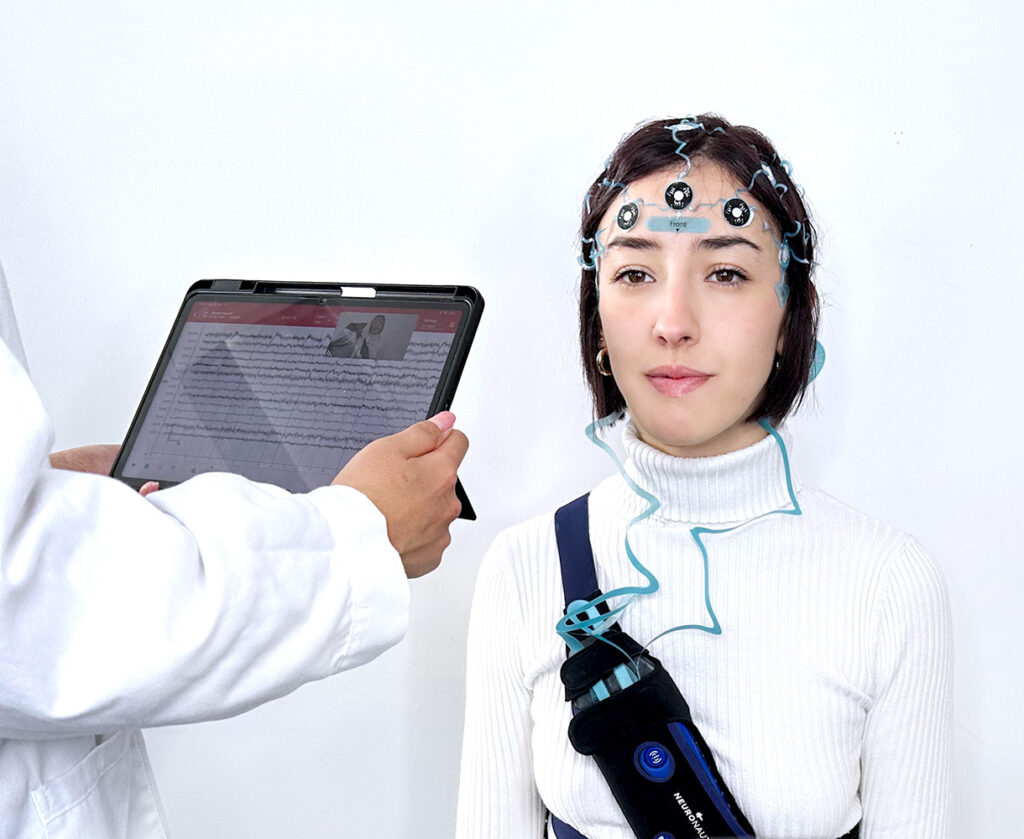
Neurophy, EEG Diagnostic Services
for Neurological Care.
Designed on demand for healthcare professionals and clinical environments, Neurophy offers comprehensive electroencephalogram (EEG) diagnostic services combining expertise in neurophysiology, connected monitoring, and professional EEG interpretation.
Neurophy, EEG Diagnostic Services
for Neurological Care.
Designed on demand for healthcare professionals and clinical environments, Neurophy offers comprehensive electroencephalogram (EEG) diagnostic services combining expertise in neurophysiology, connected monitoring, and professional EEG interpretation.
clinics and hospitals use our tele-interpretation services
weekly realizations and tele-interpretations of electrophysiology examinations in 2025 (EEG, ECG, PSG) performed at the patient’s bedside, at home or in health centers
average tele-interpretation time for a routine EEG. Maximum 3 hours.
Services are available 7 days a week, 24 hours a day with our teams of doctors specialists.
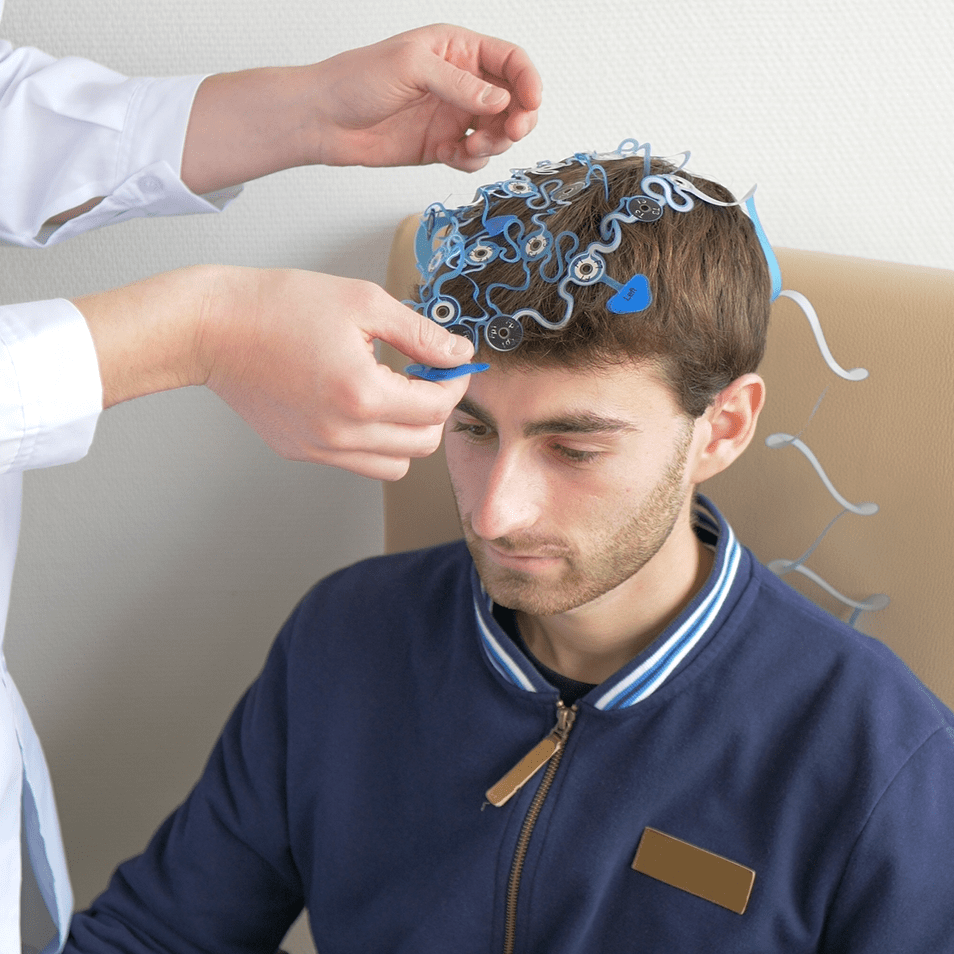
Adults indications of electroencephalograms (EEG)
- Complex febrile seizures and febrile status epilepticus
- Status epilepticus, convulsive or not
- Encephalopathy, coma, and brain death
- Acute confusion, behaviour or vigilance disorders
- First non-provoked seizure
- Positive diagnosis, epilepsy etiologic diagnosis, and epilepsy
- Syndrome diagnosis during epileptic patients’ follow-up
- Decision to stop the treatment
- The diagnosis and the initial management of epilepsy. EEG must be performed as soon as possible, ideally in the 24h following the seizure to increase sensitivity
- The diagnosis of status epilepticus with confusional state, or in case of a status epilepticus-like suspicion with a psychogenic origin
- Cognitive impairment diagnosis, confusional syndrome and/or disturbed vigilance with an acute, sub-acute or rapid progression, when the clinical data and the initial paraclinical outcome did not allow the etiology definition
- Epileptic patients’ follow-up (decision to maintain or not the treatment, modification or clinical aggravation), systematic checks not being recommended
- Metabolic encephalopathy’s diagnosis
- Evaluation of hepatic encephalopathy’s gravity
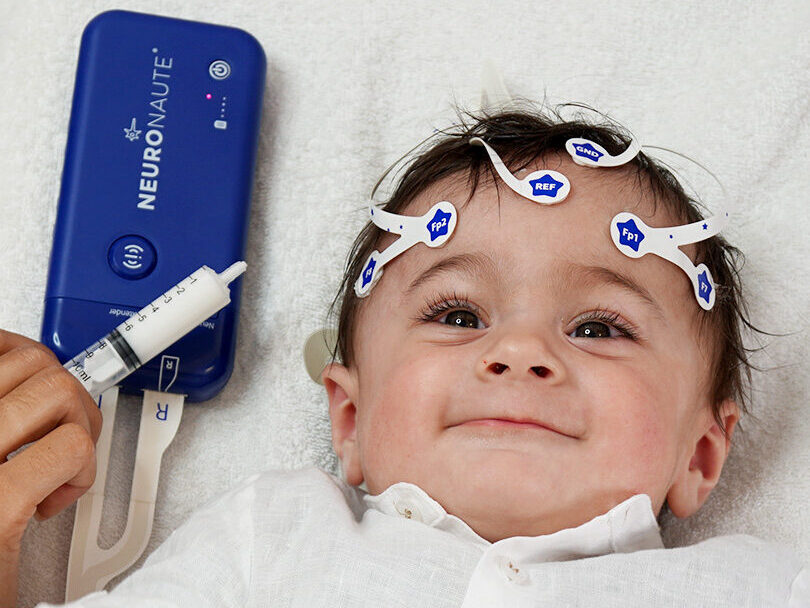
Pediatric indications of electroencephalograms
- Preterm infants in case of Neurological risk factors
- Absence of symptomatology to determine the maturative stage
- Gestational age < 28 AW : systematic EEG
- Gestational age from 29 to 35 AW : EEG is recommended during the first week of life
- Infection
- Lasting membrane rupture
- Chorioamniotitis
- Surviving twin to the other, died in utero
- Ulcero-necrotizing enterocolitis
- Abnormal or suspicious cranial ultrasonography
- Perinatal asphyxia
- Neurological distress
- Hypotonia
- Neurovegetative signs
- Abnormal movements
- Behaviour disorders
- Seizure with or without convulsion
- Seizure within the first hours after head trauma
- Infant malaise, suggesting epileptic seizure, and when no clinical precision is available at that age
- Autistic spectrum disorders
- Mental impairment
- Specific speech disorders
- Cerebral palsy
- Metabolic, chromosomal, and neurodegenerative diseases because of the increased incidence of epilepsy
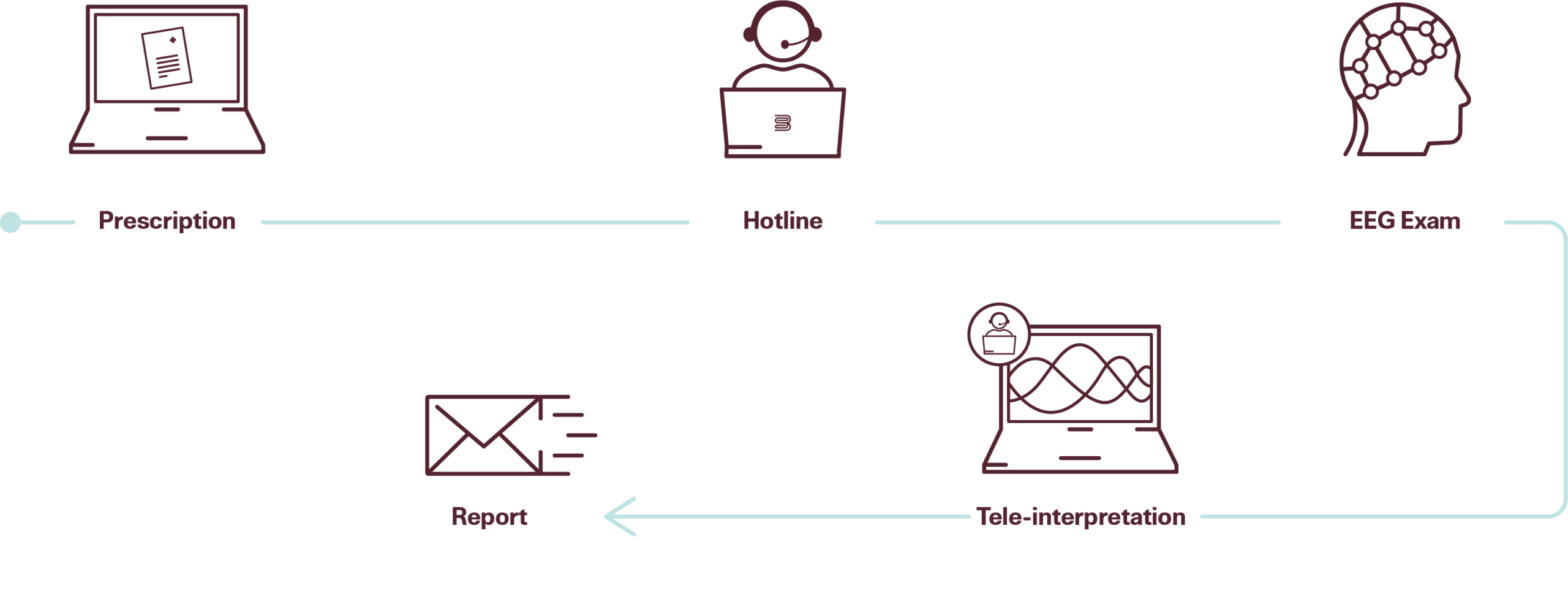
Advantages
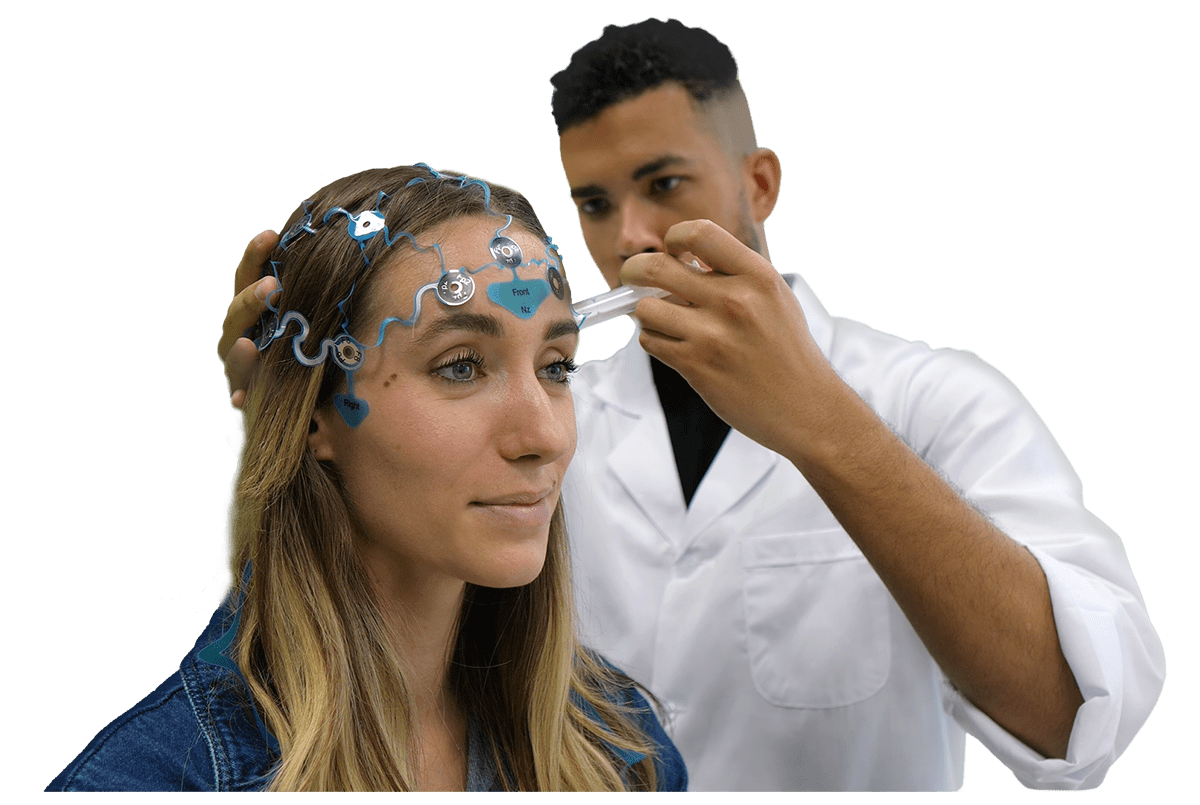
- Technicians intervene on demand with their own equipment (Neuronaute+ and IceCap) coming to hospitals, clinics and private practices
- Neurologists with over 20 years of experience in EEG reading
- Interpretation reports available within 1h and within 30min for emergencies
Medical services
- Electroencephalography on at least 8 electrodes with recording of a minimum duration of 20 minutes, at the patient’s bedside
- Electroencephalography on 8 or more electrodes with recording of at least 30 minutes, with digitization and video recording, in a patient under 6 years old
- Electroencephalography on 14 or more electrodes with recording of at least 20 minutes, with digitization in a patient aged 6 years or older
- Long duration electroencephalography of 1 to 4 hours on at least 8 electrodes, with video recording
- Electroencephalographic monitoring intraoperatively on at least 8 electrodes, for less than 4 hours
- Intraoperative electroencephalographic monitoring on at least 8 electrodes, for 4 hours or more
- Supplement for performing an electroencephalographic procedure at home or in a facility without electroencephalographic equipment
- Performing an electroencephalographic act during an endothoracic surgery or neurosurgery procedure
Medical services
- Electroencephalography on at least 8 electrodes with recording of a minimum duration of 20 minutes, at the patient’s bedside
- Electroencephalography on 8 or more electrodes with recording of at least 30 minutes, with digitization and video recording, in a patient under 6 years old
- Electroencephalography on 14 or more electrodes with recording of at least 20 minutes, with digitization in a patient aged 6 years or older
- Long duration electroencephalography of 1 to 4 hours on at least 8 electrodes, with video recording
- Electroencephalographic monitoring intraoperatively on at least 8 electrodes, for less than 4 hours
- Intraoperative electroencephalographic monitoring on at least 8 electrodes, for 4 hours or more
- Supplement for performing an electroencephalographic procedure at home or in a facility without electroencephalographic equipment
- Performing an electroencephalographic act during an endothoracic surgery or neurosurgery procedure