This page is reserved for healthcare professionals.
Long-Term Video EEG at home:
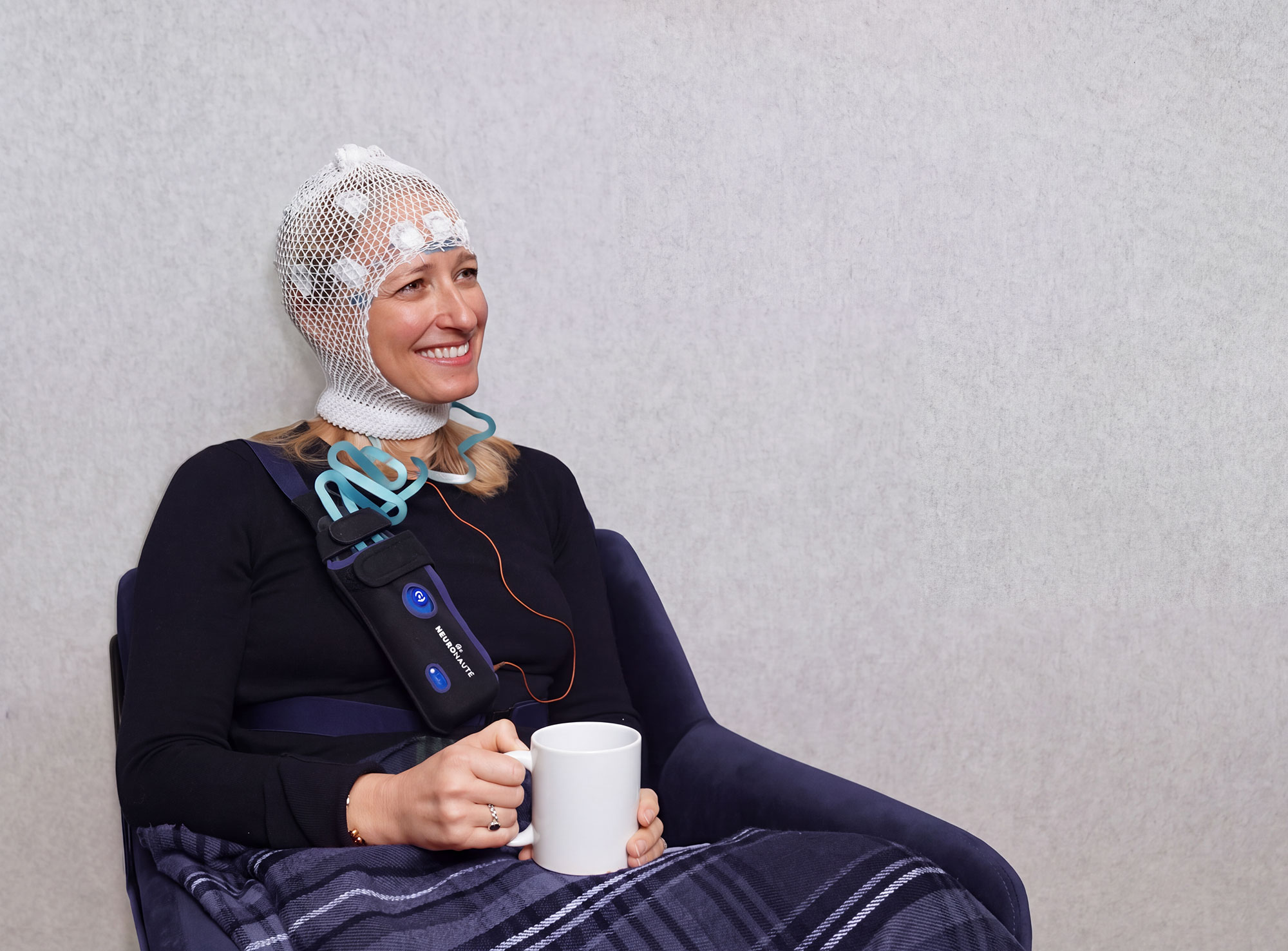
Hospital-grade prolonged video-EEG, in the patient’s own environment.
Designed for neurologists and their patients, our Long-Term Video EEG service performs 24- to 72-hour video-EEG recordings in the patient’s home. It combines setup by EEG nurses, round-the-clock connected monitoring and interpretation by neurologists every 24 hours.
Long-Term Video EEG at home:
hospital-grade prolonged video-EEG, in the patient’s own environment.
Designed for neurologists and their patients, our Long-Term Video EEG service performs 24- to 72-hour video-EEG recordings in the patient’s home. It combines setup by EEG nurses, round-the-clock connected monitoring and interpretation by neurologists every 24 hours.
of home-based recordings contributed to the diagnosis, in 75 patients followed for 22 months at Nancy University Hospital (CHRU de Nancy).
Indications for long-term video EEG
Long-term video-EEG is the reference method for:
- Diagnosing definite or highly probable epilepsy, when standard EEG combined with the patient history is inconclusive after a first possible or probable seizure.
Home recording is indicated for:
- Quantifying seizures and interictal abnormalities to guide treatment adjustments: 20 to 25% of patients are unaware of their seizures, and 44% of recorded seizures go unreported,
- Differential diagnosis, particularly between functional dissociative seizures and epileptic seizures,
- Classifying seizure type and syndromic diagnosis.
Long-Term Video EEG can be useful for:
- Stabilised epilepsy with persistent doubt,
- Elderly patients with suspected epilepsy or cognitive decline who are difficult to investigate,
- Intellectual or physical disability,
- Sleep disorders and abnormal nocturnal movements,
Not indicated for pre-surgical seizure characterisation: this requires admission to a hospital video-EEG unit (medication withdrawal, ictal examination)
Advantages to long-term EEG
Hospital-grade quality, real-life setting
The patient is recorded in real-life conditions, without hospitalisation: better acceptability and shorter waiting times than in a video-EEG unit.
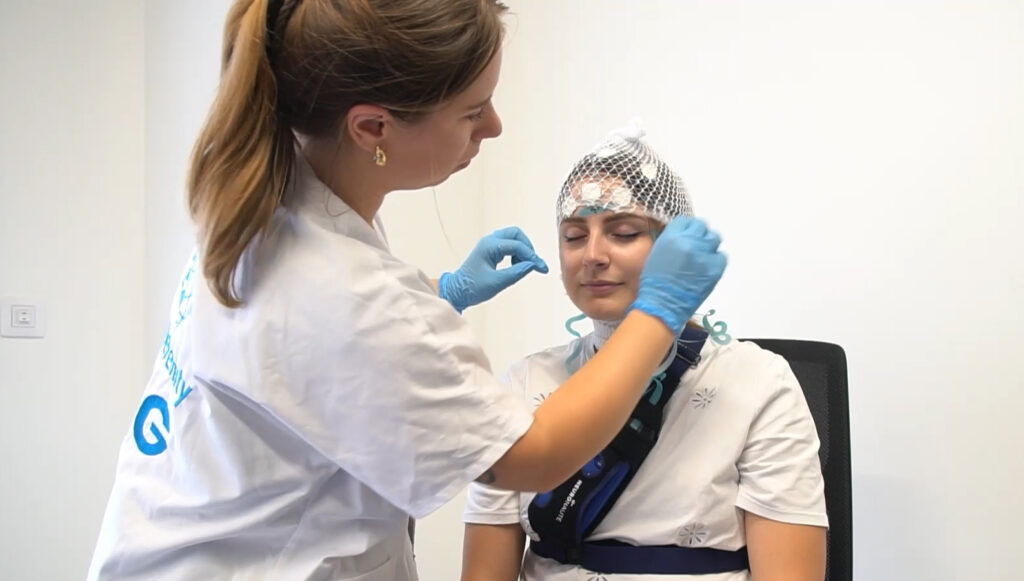
Setup performed by EEG nurses
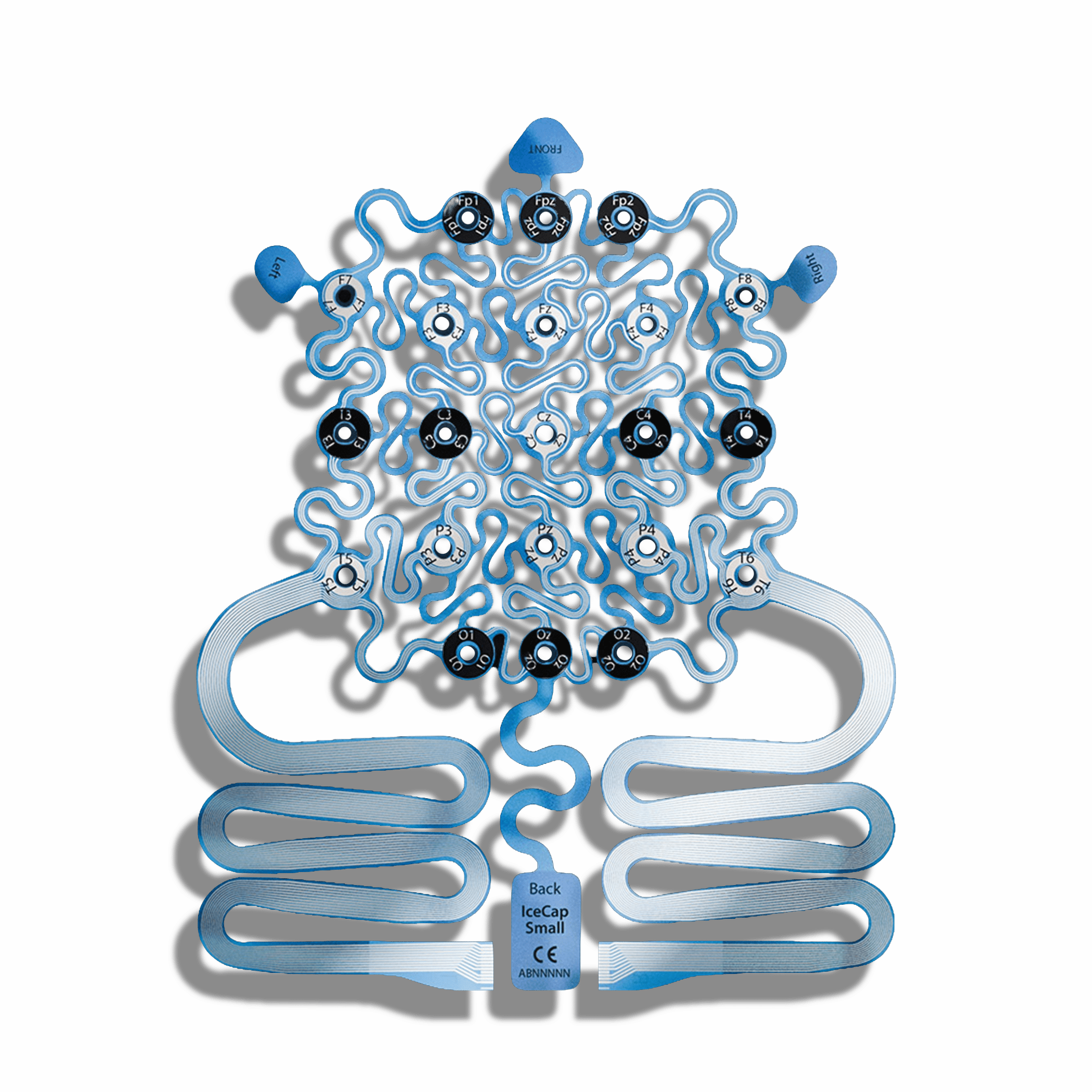
The 21-electrode IceCap headset is fitted at home or in a clinic, with a 20-minute standard EEG that starts the recording.
Proactive 24/7 monitoring
A team of EEG nurses continuously checks the quality of the EEG trace and video, calls the patient every day and annotates their symptoms on the trace. A neurologist is on call.
Interpretation every 24 hours
The interpreting neurologist has the prescription, the clinical context and the recording comments, and can stop the test early.
No upfront cost for the patient
Covered by French national health insurance and supplementary insurance; equipment returned by post free of charge.
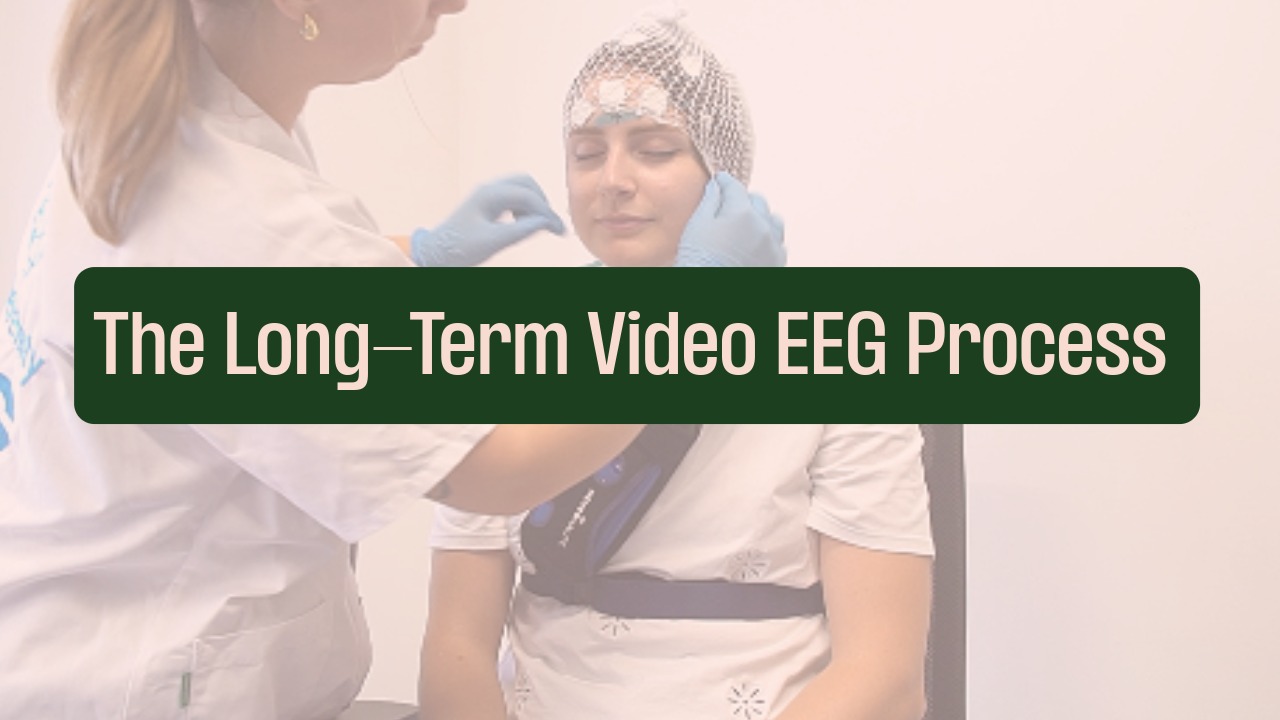
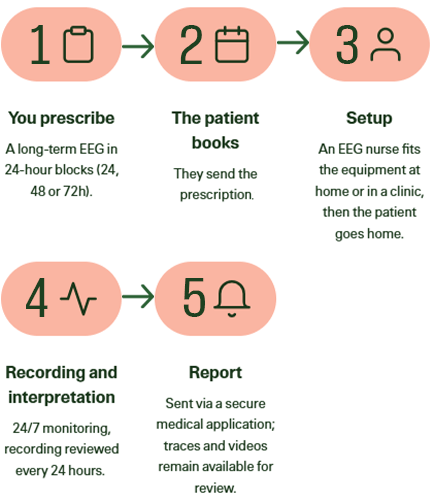
Referring a patient: how does it work?
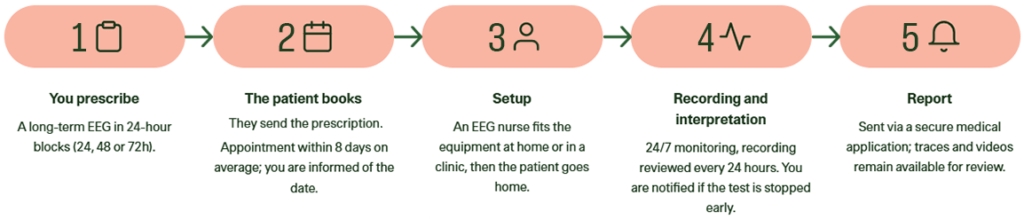
Referring a patient: how does it work?
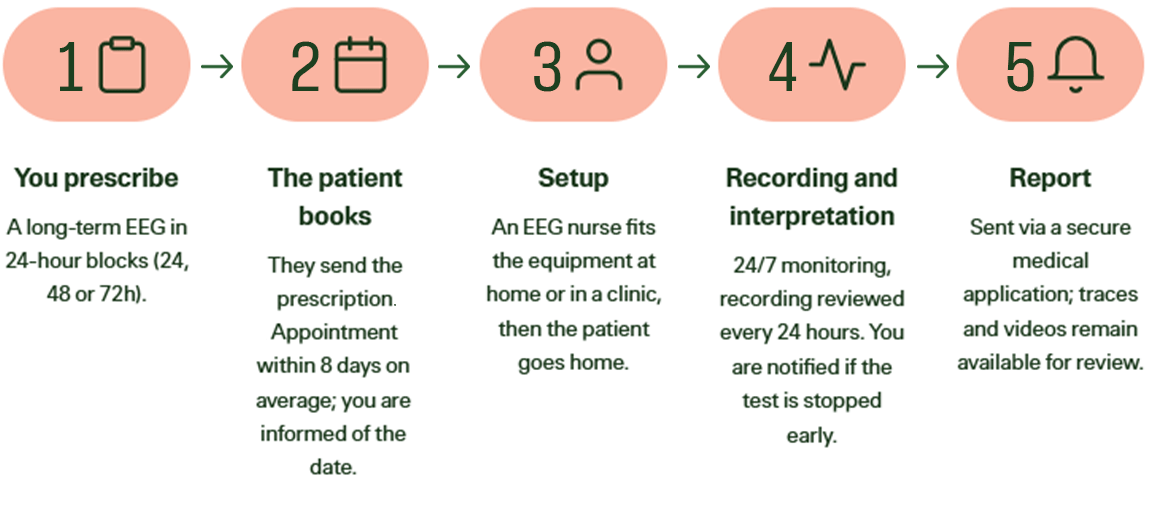
Referring a patient: how does it work?
Your prescriber portal: BIOSerenity Connect
All you need is a computer with an internet connection to follow your patients in real time.
Report
Direct access to interpretation reports.
Traces and videos
EEG traces and videos stored for later review.
Seizure visualisation
Patient-reported events annotated on the trace for easier navigation.
Monitoring comments
Observations from the Patient Monitoring team during the recording.
An organisation built around interpretation
Scheduling, EEG nurses, Patient Monitoring, support and logistics: around twenty people work every day to give the interpreting neurologist everything needed for a high-quality interpretation.
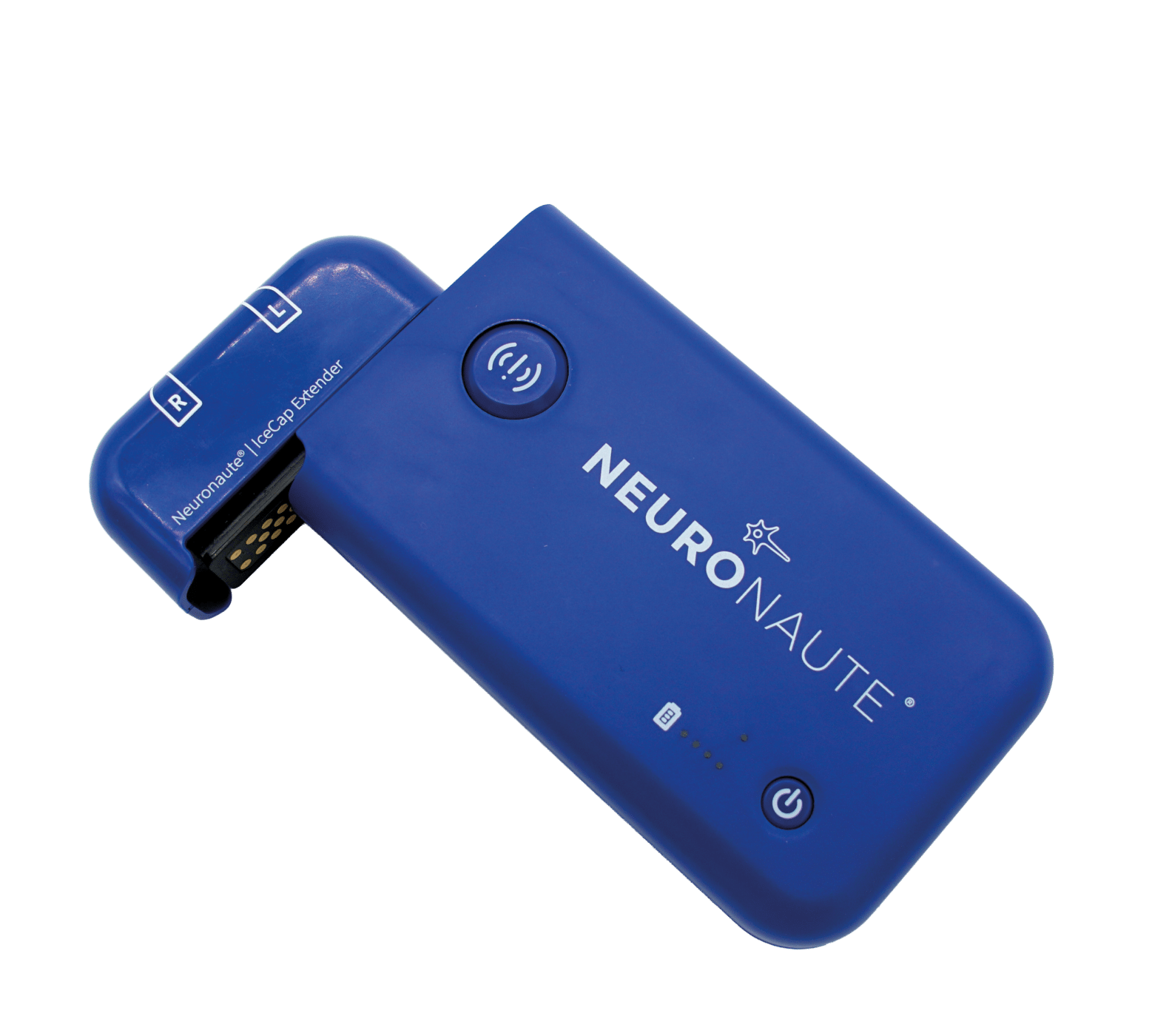
A 100% French device, light and discreet
Made in France
Manufactured in Troyes
The Neuronaute and IceCap are produced in our own factory, which also handles logistics: disinfecting, recharging and shipping kits throughout France.
100% French R&D
Devices designed and developed in France.
100% in-house AI team
Around ten in-house staff.