


Training Large Brain Models for EEG Analysis on the Jean Zay Supercomputer
BIOSerenity’s AI research team is using one of France’s most powerful supercomputers to pretrain and systematically scale up its Large Brain Models that read brain activity.
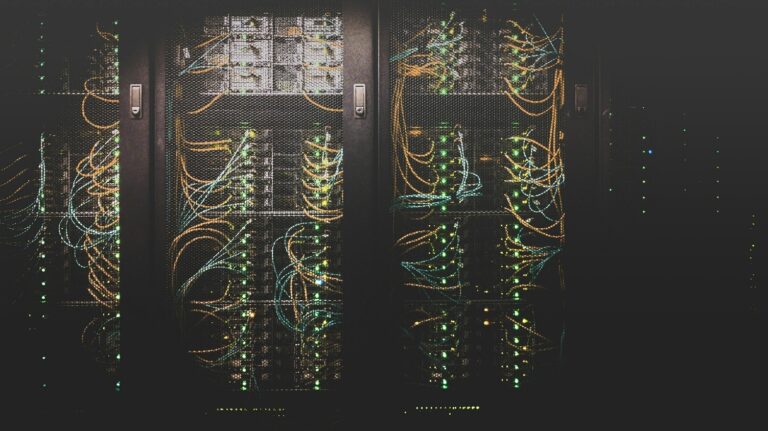
BIOSerenity’s AI research team is using one of France’s most powerful supercomputers to pretrain and systematically scale up its Large Brain Models that read brain activity.
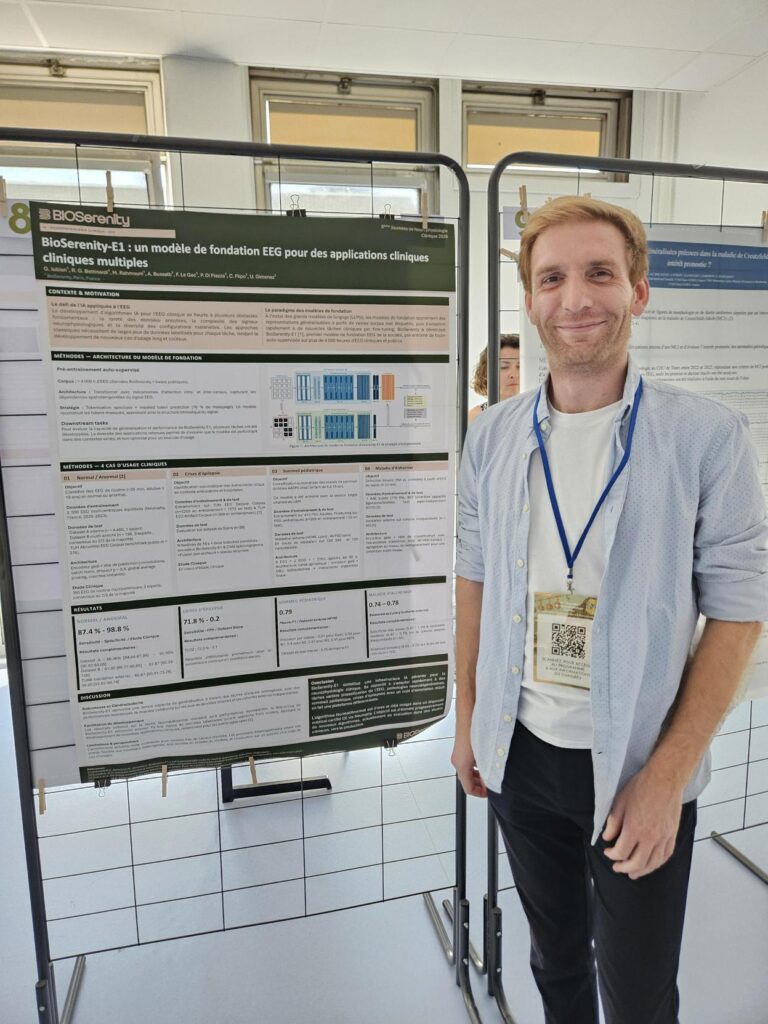
Guillaume Jubien presented a poster on the EEG foundation model BioSerenity-E1 and its performance on four clinical tasks to an audience of clinicians and researchers during the 8th Journées de Neurophysiologie Clinique in Grenoble on June 24.
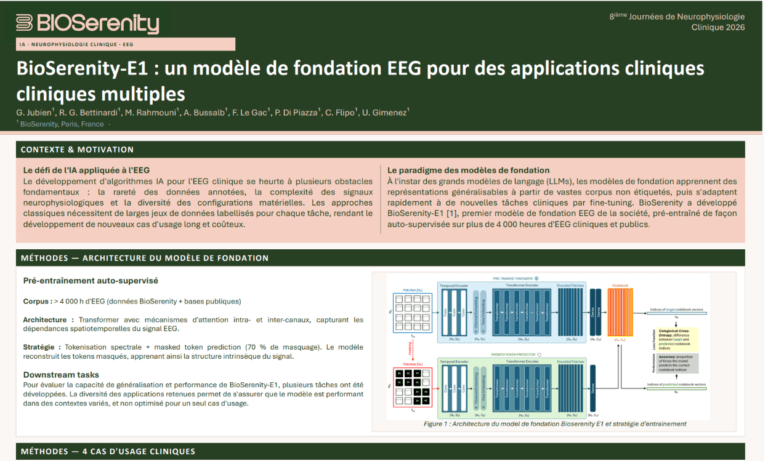
Our abstract “BioSerenity-E1: a foundation EEG model for multiple clinical applications” has been accepted for a poster presentation at the 8th Journées de Neurophysiologie Clinique in Grenoble. This work highlights our research in the field of AI-assisted EEG analysis and the development of foundational models designed to support a wide range of applications in clinical neurophysiology.
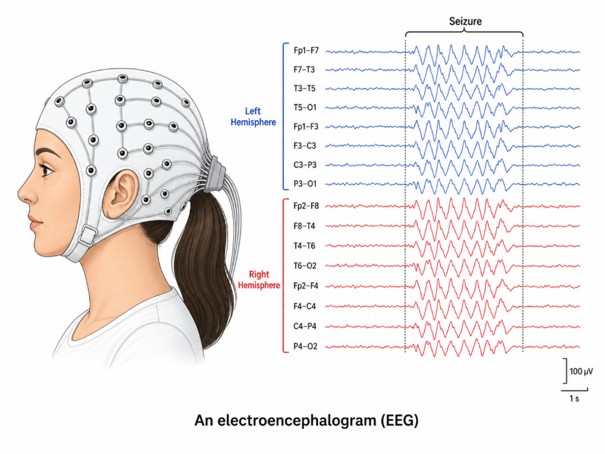
The brain is always active. Even during sleep, millions of neurons are firing in coordinated patterns, producing tiny electrical signals that ripple across the scalp. The electroencephalogram (EEG) is the tool that makes those signals visible. Since its introduction nearly a century ago, [1,2] it has given clinicians and researchers a window into brain activity that no other technology can replicate: continuous, real-time, and non-invasive.
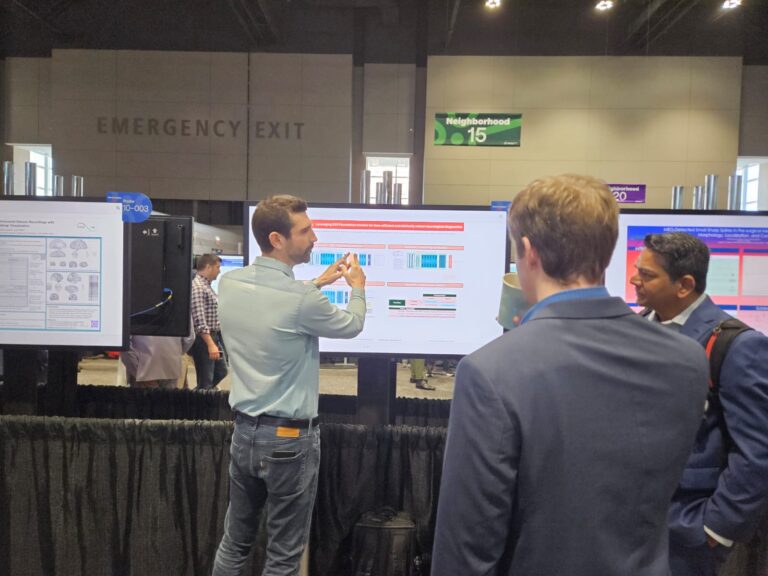
At the American Academy of Neurology (AAN) Annual Meeting 2026, BIOSerenity was represented in Chicago by Ruggero Bettinardi (Data Science) and Anaïs Llorens (Strategic Marketing). This event is one of the leading international gatherings in neurology, bringing together clinicians, researchers, and industry stakeholders.
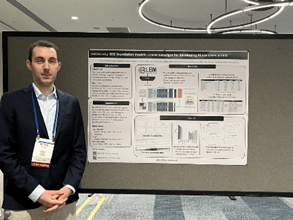
Antoine Honoré presented a poster on the latest advances in our EEG foundation models at the American Clinical Neurophysiology Society (ACNS) Annual Meeting 2026, one of the leading international events in clinical neurophysiology, held in New Orleans from February 19 to 22.
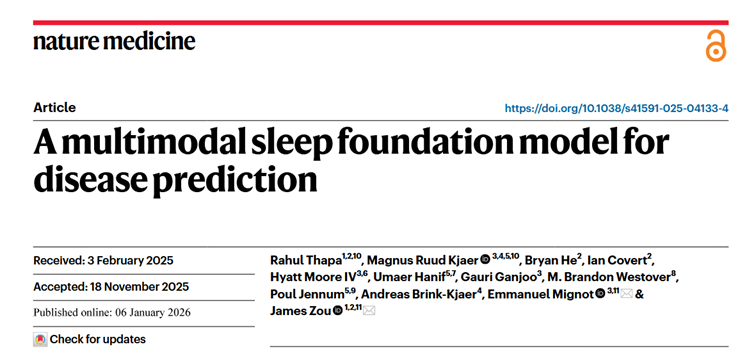
We are kicking off 2026 with the publication of a paper in Nature Medicine, the result of a collaboration with Prof. Emmanuel Mignot’s team at Stanford. This study explores the development of a multimodal foundation model applied to sleep data, with the goal of improving automated disease detection from polysomnography signals. It marks a significant step forward in the use of AI for sleep disorder diagnostics.